GLview

GPU Extensions Viewer for OpenGL, Vulkan & DirectX

GLview gives you deep insight into your 3D accelerator — vendor name, API versions, renderer details, and a full extensions database. Ideal for developers, QA engineers, and graphics enthusiasts.

100% Free · No adware · No spyware · Windows 10/11 · Also on Mac, iOS & Android

25 yearsof continuous development

10,000+GPU renderers in database

4 APIsOpenGL · Vulkan · DirectX · Metal

10 languagesEN · FR · DE · IT · JA · NL · PT · UK · RU · ZH

100% freeSoftpedia certified clean

Overview

Your trusted graphics diagnostic companion

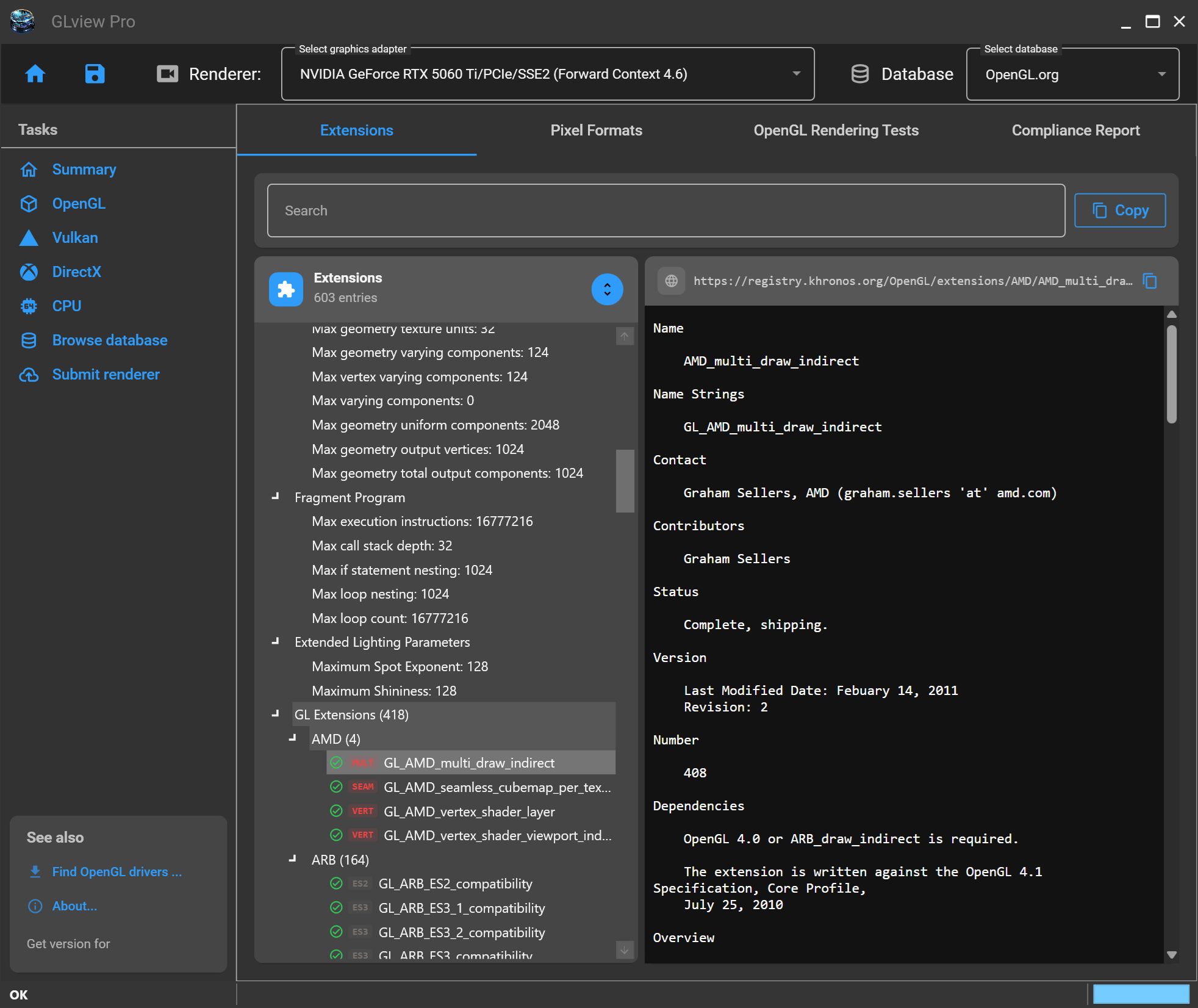
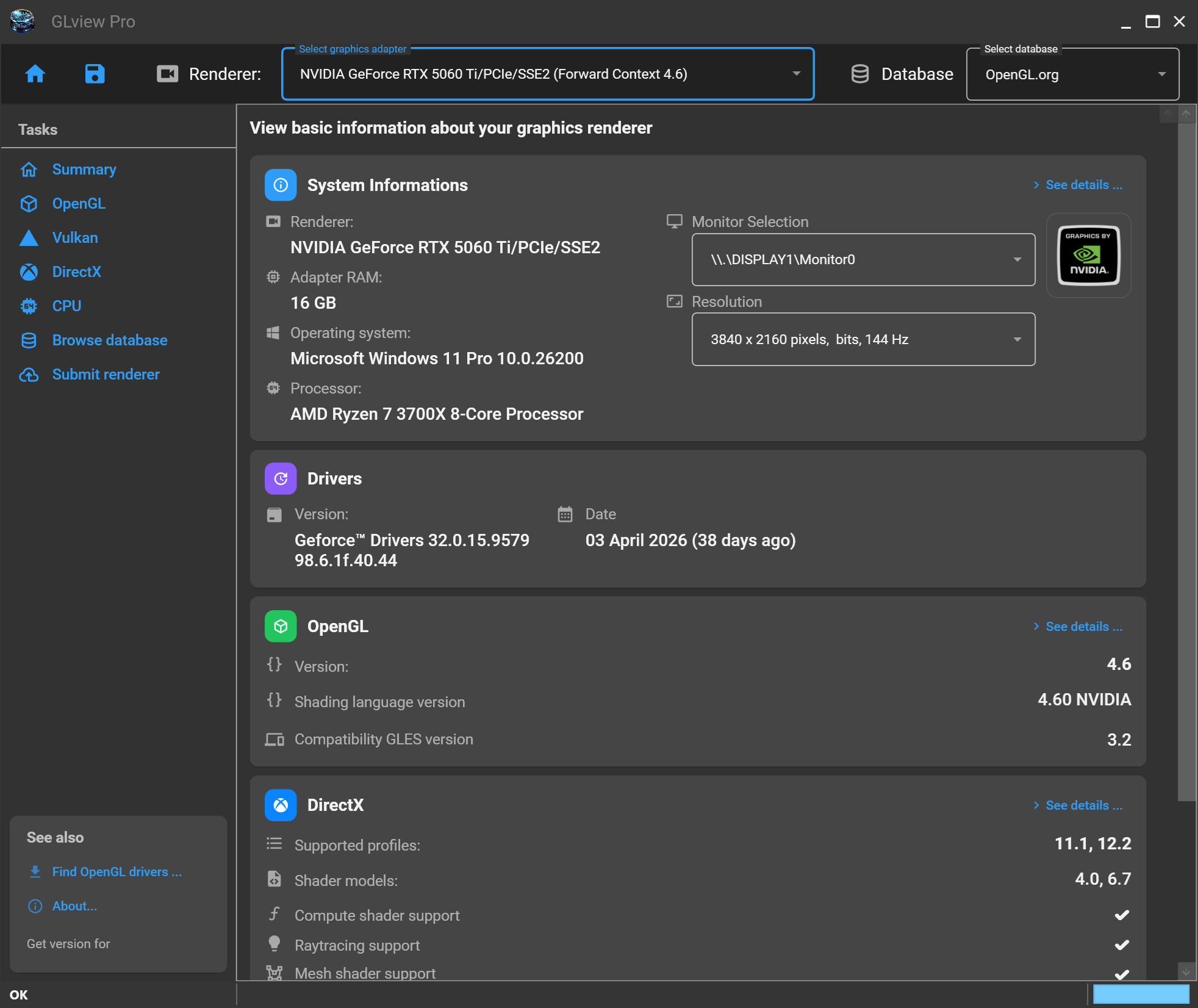
GLview is a professional graphics diagnostic and benchmarking tool used by developers, gamers, and system integrators worldwide. It reveals every detail of your GPU — from extension support and API versions to real-time rendering performance.

Whether you’re a gaming enthusiast optimizing performance, a developer targeting specific API versions, or an IT professional auditing hardware capabilities — GLview provides the data you need, clearly and instantly.

GLview is free of charge and has been recognized by Softpedia as 100% free and safe from spyware, adware, and viruses.
Features

Available on Windows, Mac, iOS & Android

GLview 7 — Windows

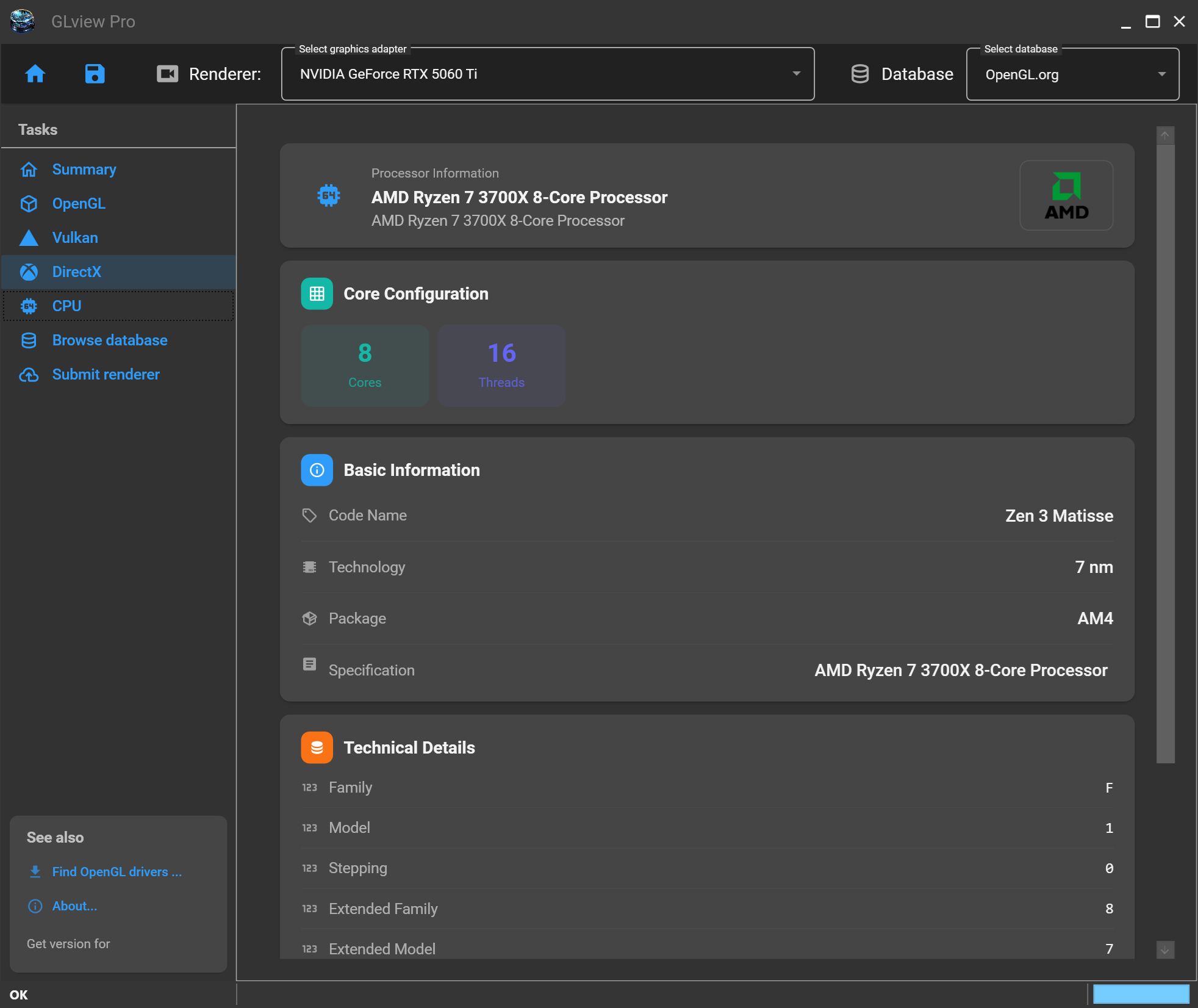
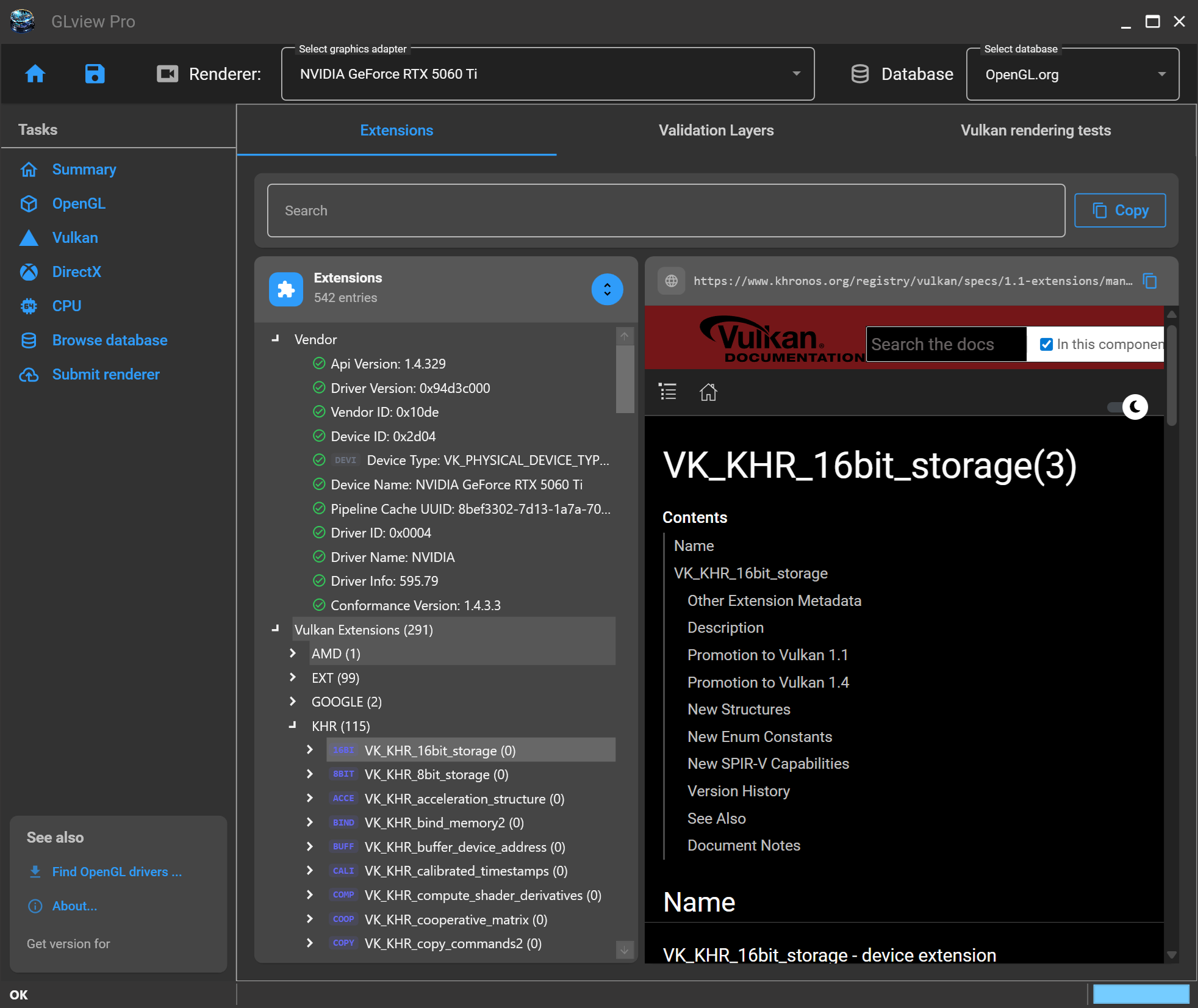
Full-featured GPU diagnostics with rendering benchmarks, DirectX viewer, and a database of 10,000+ extension entries. The most complete OpenGL, Vulkan & DirectX inspector for Windows.

OpenGL   Vulkan   DirectX 12   CPUID

GLview Pro — iOS & macOS

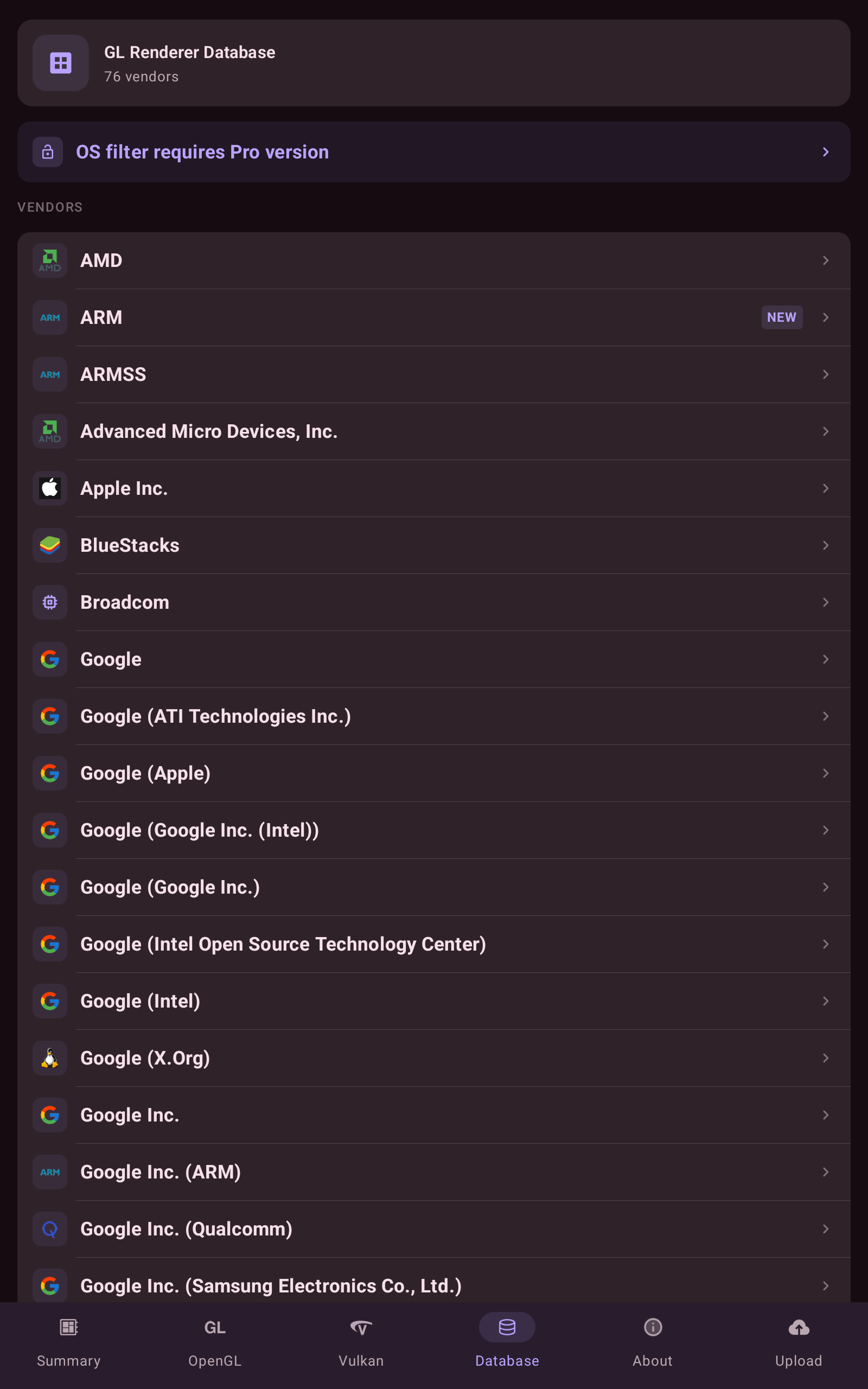
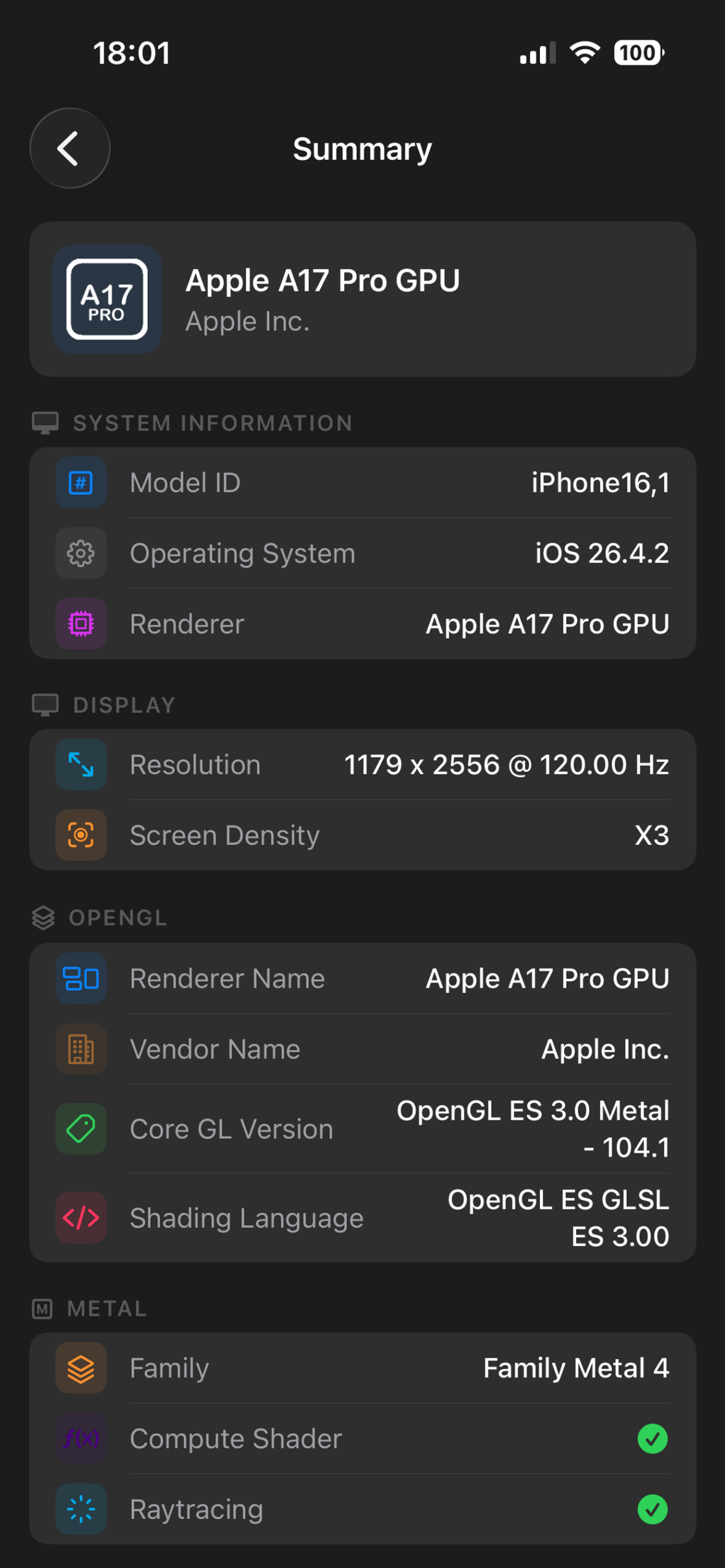
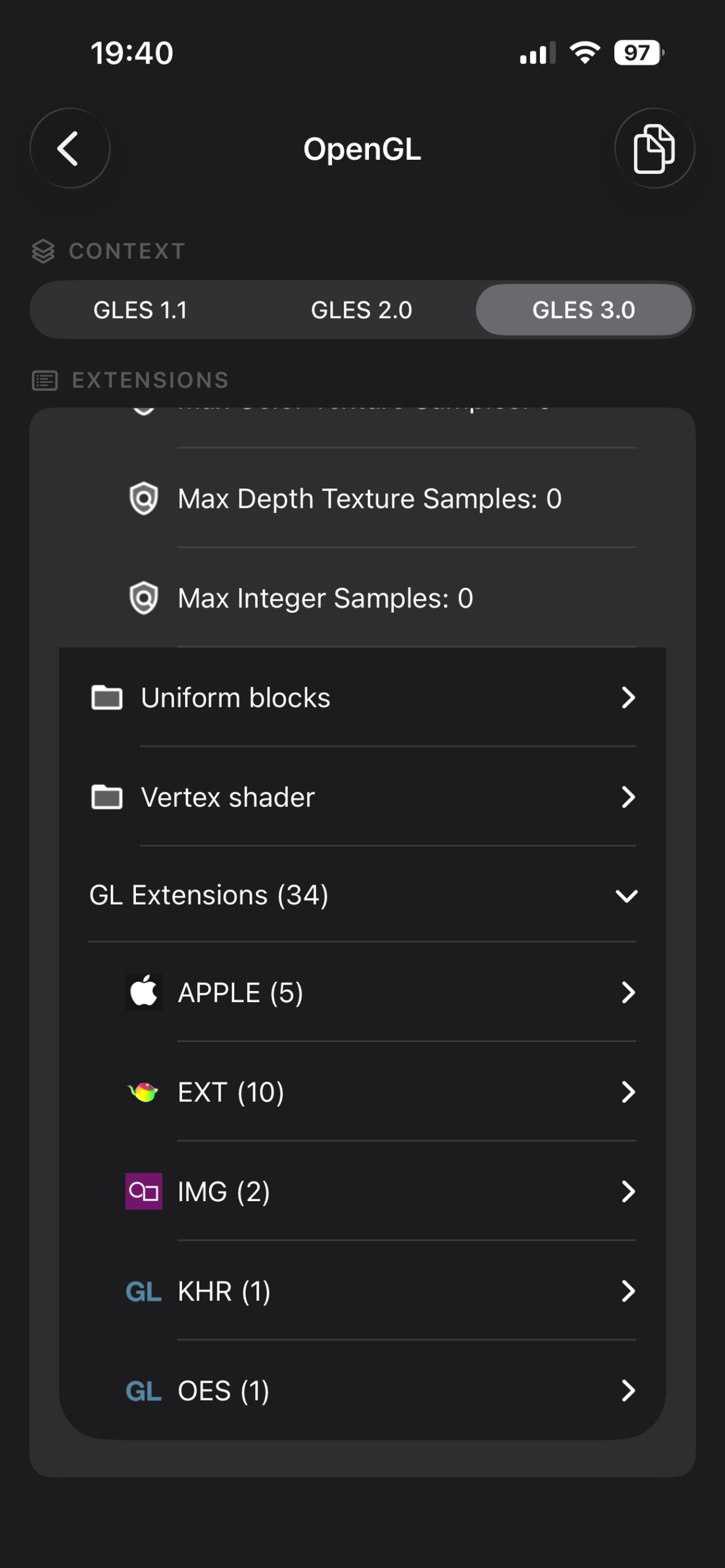
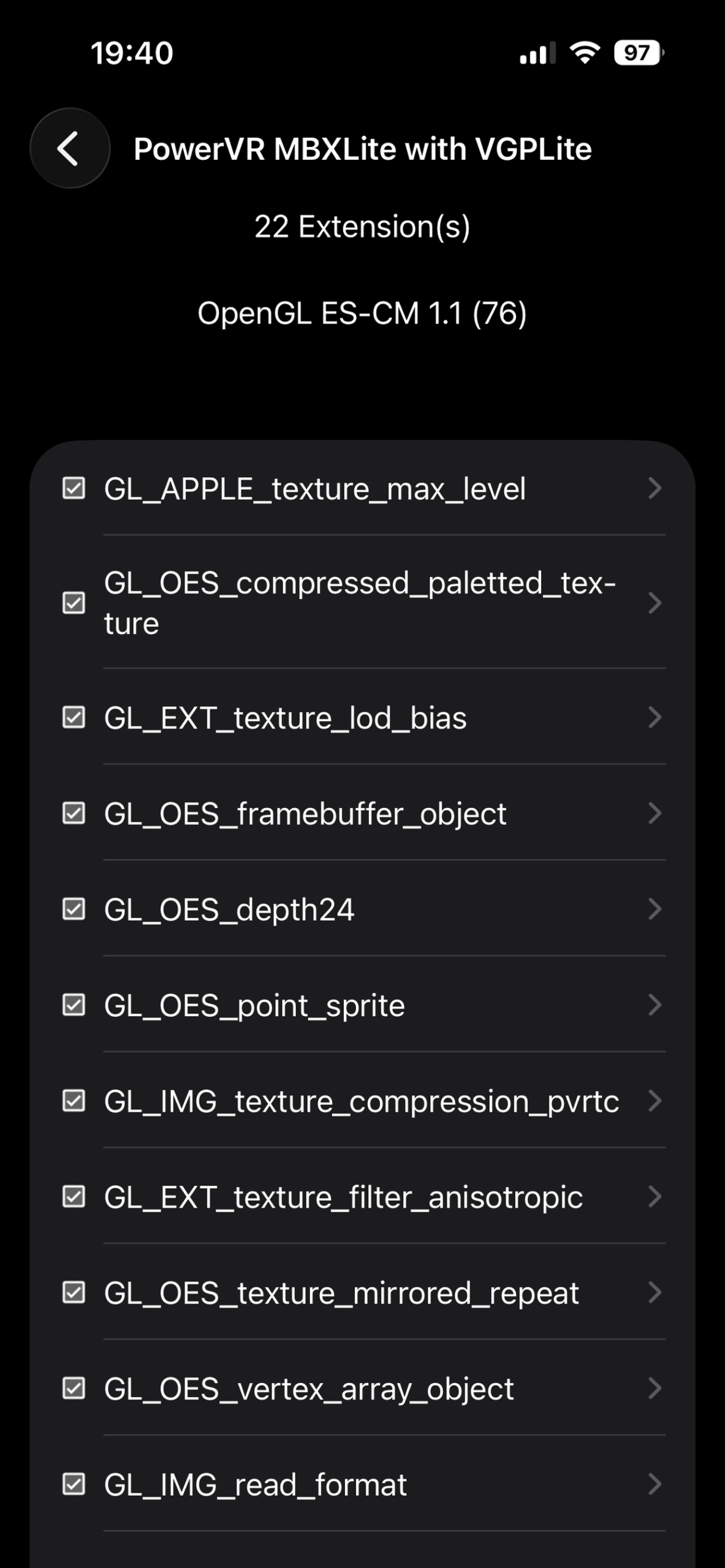
Fully rewritten in SwiftUI. Native experience optimized for Apple Silicon and iOS 26. Covers Metal, OpenGL ES, Vulkan via MoltenVK, and GPU driver details for all supported devices.

Metal   OpenGL ES   SwiftUI

GLview Pro — Android

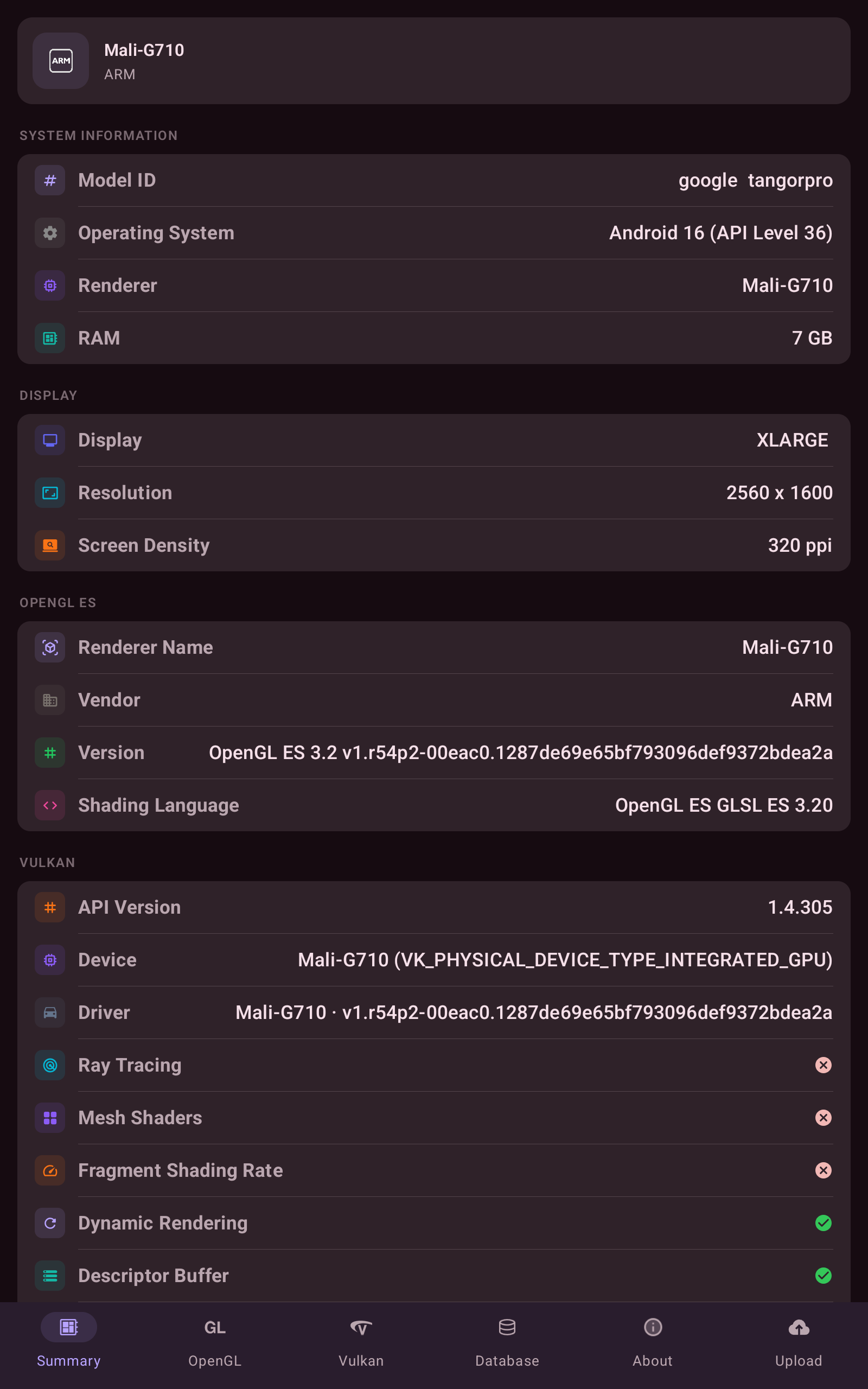
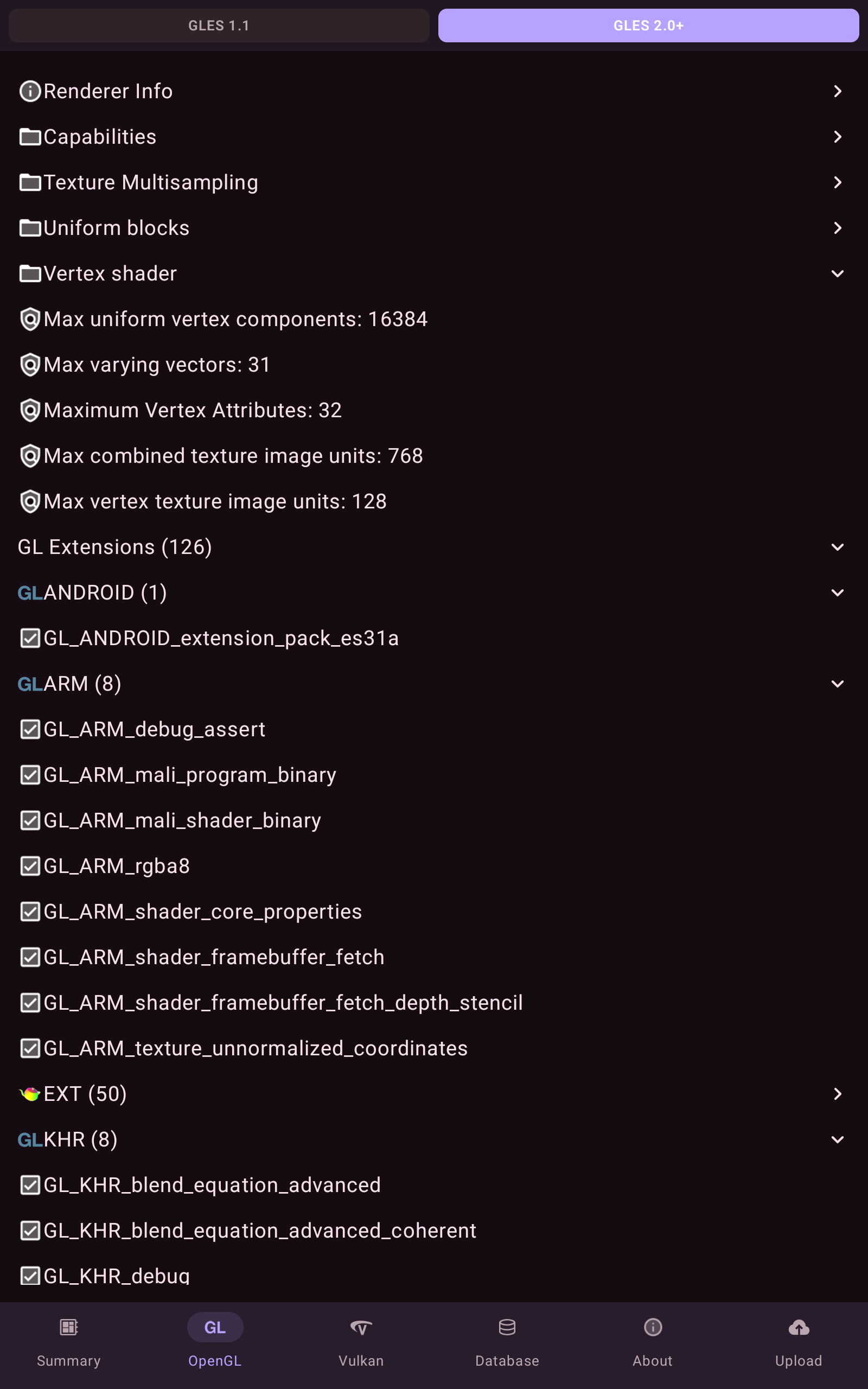
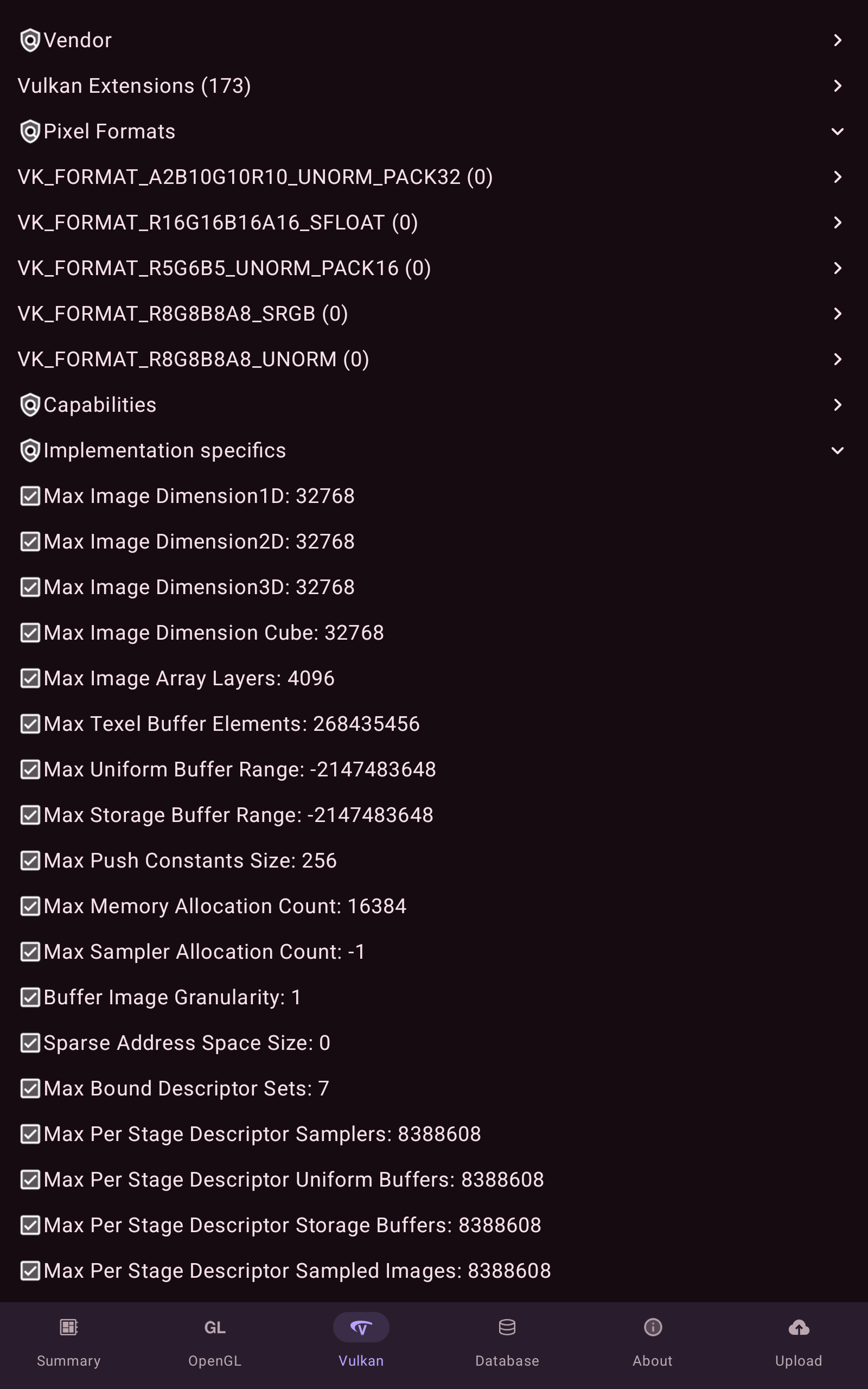
Rewritten with Jetpack Compose. Modern design with full Vulkan feature detection, GPU information, OpenGL ES extension listing, and device capability reporting.

Vulkan   OpenGL ES   Jetpack Compose

See GLview 7 in Action

Watch GLview’s OpenGL Extensions List, version details, rendering tests, and 10,000+ entry database — live demo walkthroughs.

Release Notes

7.4.10 (Oct 12, 2026)
  • Added new Vulkan 1.3 rendering tests powered by RenderCore, with support for multisample anti-aliasing, anisotropic filtering, texture LOD bias, and exclusive fullscreen.
  • Improved rendering-test stability, result reporting, and cancellation handling.
  • Fixed crashes when switching graphics adapters or starting OpenGL and Vulkan benchmarks.
  • Fixed OpenGL tessellation shader selection and improved shader loading and error handling.
  • Improved rendering overlays and handling of minimized or inactive fullscreen windows.
  • Improved report-import performance and duplicate detection.
  • Fixed update-version comparisons and refreshed update dialogs.
  •  
7.4.9
  • Fixed crashes when selecting graphics adapters or starting OpenGL/Vulkan benchmarks.
  • Fixed null-device handling when querying Vulkan or DirectX profiles.
  • Allowed hardware discovery to continue when rendering-test resources were missing.
  • Improved deployment of runtime libraries, databases, and rendering resources.
  • Updated native crash-reporting integration.
  • tion” option
7.3.4
  • Now also available on Windows Store 
  • Better support for high scale and 1080p display.
  • Fixed silent installation behavior
  • Enhanced crash reporting and diagnostics
  • Added “Launch after installation” option
7.0.10
  • Partial Windows 7 support
  • Fallback to Core Profile if Compatibility Profile is not supported
  • Switching context now refreshes the interface properly
  • Restore Submit button
7.0.3
  • Summary page scrollable for displays with less than 1080p
  • Installation is now in C:\Program Files
  • Added Simplified Chinese language
  • Removed dependencies with Visual Studio 2020 DLL
6.4.99 — Final 6.x release (2024-02-25)
  • Updated installer
  • Updated database
6.4.4
  • Moved glview.log to /AppData folder
  • Improved ‘latest version’ detection
  • Updated database
6.4.3
  • Support for non-standard installation path
  • Updated to Visual Studio 2022
  • Updated database
6.4.0
  • Fast database loading with a new format
  • Improved French translation
  • Improved Vulkan rendering tests
  • New application icon
  • Updated database
6.3.8
  • Updated DirectX 12 and Shader Model detection (up to 6.7)
  • Other bug fixes and improvements
6.3.7
  • Added sRGB and Linear framebuffer for Vulkan and OpenGL rendering tests
  • Other bug fixes and improvements
6.3.0
  • Added Vulkan rendering tests
  • Optimization in GL rendering tests
  • Added command line parameter glview.exe -fast
6.2.0 – 6.1.2
  • Entirely rewritten interface in WPF, optimized for Windows 10
  • Vulkan extensions database browser
  • New CPUID section with processor name and number
  • 10,000+ renderer database, faster loading
  • Translation to Russian and French
5.3.4 – 5.1.4 (2019)
  • GPU memory size via AMD/NVIDIA GL extensions (reports 4GB+)
  • Correct AMD & NVIDIA driver version reporting
  • Vulkan support improved
  • High-density screen support
  • Improved database
FAQ

Frequently Asked Questions

Everything you need to know about GLview. Can’t find what you’re looking for? Check the links section.

Is GLview really free?

Yes. GLview for Windows has always been free to download and use. It contains no adware, spyware, or malware — independently verified by Softpedia. GLview Pro (iOS/Android/macOS) may have a free tier with optional in-app purchases for advanced features.

What’s the difference between GLview and GLview Pro?

GLview 7.x is the Windows desktop application with the full rendering test suite, DX12 viewer, and database. GLview Pro is the mobile/modern desktop edition — rebuilt with SwiftUI (iOS/macOS) and Jetpack Compose (Android).

What Windows versions are supported?

GLview 7.x targets Windows 10 and 11. GLview 5.39 supports Windows XP/Vista. GLview 2.60 (re-released 2026) covers systems back to Windows NT 4.0 and remains compatible up to Windows 11.

Can I check my DirectX version with GLview?

Yes. GLview 7.x includes an integrated DirectX Capabilities Viewer that detects your DX version, DX12 Ultimate support, and Shader Model up to 6.7.

What is the GLview SDK?

The open-source glview-kit on GitHub lets developers integrate and trigger GLview’s rendering tests programmatically, without launching the full application. Useful for automated testing pipelines.

How do I submit my GPU data to the database?

Within GLview, the Submit function sends your GPU’s capabilities data anonymously to the centralized database. This keeps the renderer database up to date for the entire community.

Resources & Links

GLVIEW SDK

Open-source SDK to activate rendering tests without starting the full application: